A Few of My Favorite Things: November 14

Here are a few things that caught my eye this past week.

With Thanksgiving only two weeks away, one of my favorites this week is the Thanksgiving playlist on Spotify put together by my friends and co-workers Lydia McMillan and Elizabeth Hyndman. This Thanksgiving soundtrack, featuring classical, Christian, and Pop music, will definitely get you in the mood for the holiday. You can bet this will be playing in my kitchen while I prepare the turkey and all the trimmings come November 27.

AP Stylebook’s editors gave tips on how to correctly write about the festivities in their November Twitter chat. Here are a few highlights:

  • When talking about kitchen prep, correct AP style is to say foil, not aluminum foil or tin foil.
  • You’ll want to roll out your pie dough on waxed paper, not wax paper. Line your baking sheets with kitchen parchment, not parchment paper.
  • Stuffing or dressing? If it’s stuffed in the bird, call it stuffing. If it’s cooked on the side, call it dressing.

Fast Company had an article that re-imagined famous Disney princesses with normal waistlines.

In a recent set of illustrations, artist Loryn Brantz gave the princesses a little reverse plastic surgery. Here, she’s sketched for us what Elsa, Ariel, Pocahontas, and the rest of the Disney princess crew would look like with realistic waistlines.

T-minus 2 Weeks until Thanksgiving

IMG_0688

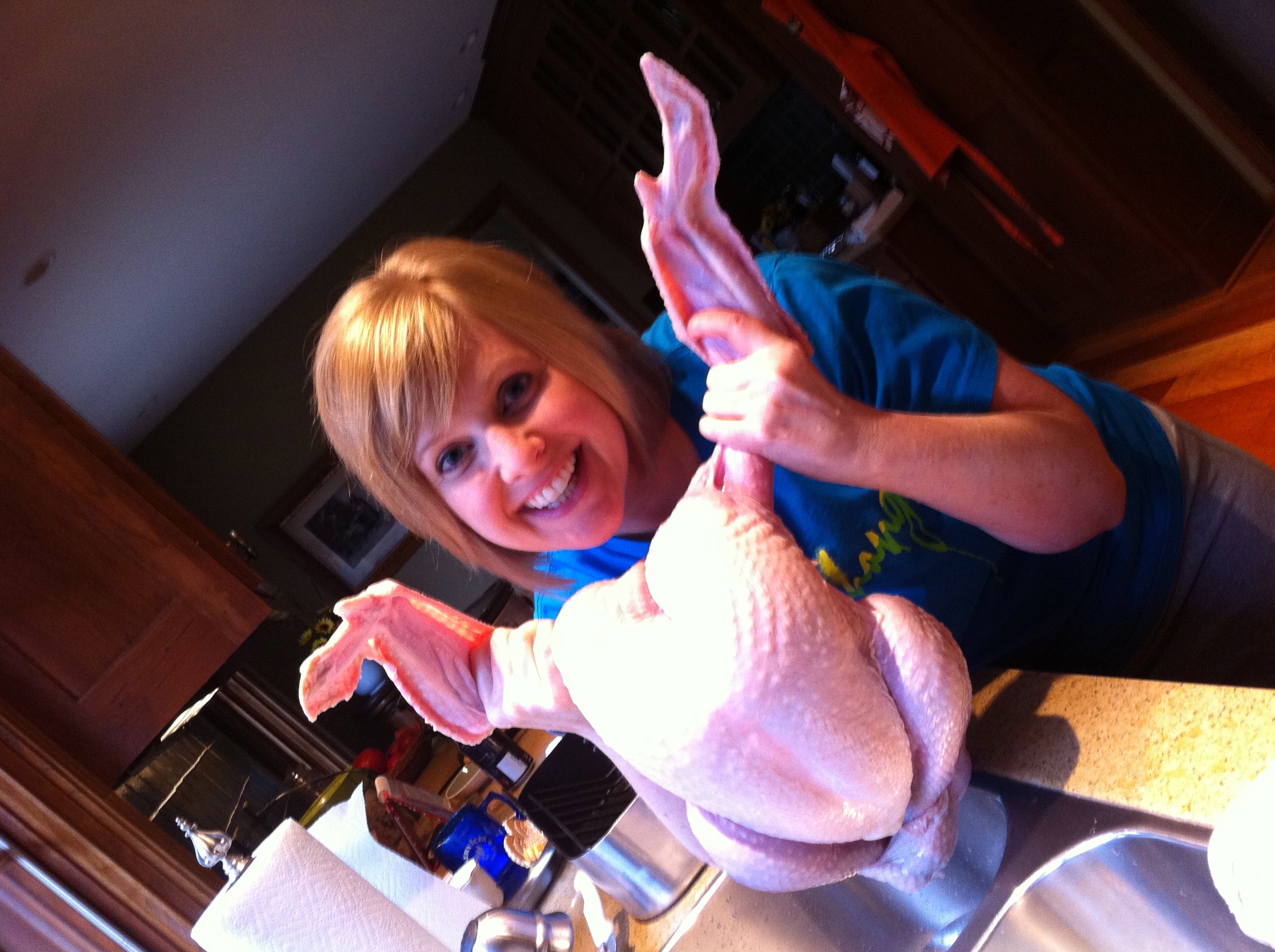
Getting Mr. Turkey ready for his big moment!

When it comes to Thanksgiving Dinner, we all know the turkey is the main attraction. But honestly, I’m more about the side dishes. I can skip the turkey as long as my plate is filled with cornbread dressing, sweet potato casserole, bacon-wrapped green beans, and cranberry relish. But most people think Thanksgiving would be ruined without the bird.

I’ll never forget the Thanksgiving my mom and I decided to serve only casseroles for dinner. We’d included all the regulars: chicken and rice casserole, broccoli casserole, sweet potato casserole, and hash brown casserole. You get the picture. No turkey. No dressing. That was the year my older brother (a teen at the time) had his Thanksgiving meltdown.

First, he was upset that we were eating a late supper (around 7:30 p.m.) because he wanted to meet some friends of his who were planning to hang out that night. And then he saw the menu. He made it through dinner with only a few snide remarks. But when he asked to be excused and my father said he couldn’t leave the table until we were done with dessert and coffee, he lost it.

“Why can’t we eat early in the day like everybody else?” “And why can’t we have turkey and dressing like normal people.”

That got him sent to his room, which I’m pretty sure he preferred. For some reason that moment is forever sketched in my memory. We even joke about it some 30 years later. Remember the year we had casseroles?!

We’ve had turkey and dressing every since.

1916066_186950012217_2424485_nWhen it comes to turkey prep, I’ve tried it all—brining, basting, low and slow, spatchcocked, roasting on the grill, and even roasting the turkey breast side down. The only thing I haven’t tired is frying or smoking. I’d rather pay someone else to do those.

I have to admit, brining has produced the most tender and juicy bird. And that bird I roasted upside down was delicious. A combination of the two was fantastic! But honestly, sticking to the classic with a couple of modifications will do just fine. After trying several methods, here’s the recipe I’ve landed on. It’s my take on Alton Brown’s Good Eats Roast Turkey. He truly is a genius so feel free to follow his recipe from start to finish. You won’t be disappointed. I added a few more herbs because I like thyme with turkey. Notice there’s no stuffing. Forget the stuffing. I serve my grandmother’s cornbread dressing on the side.

I hope you have wonderful and delicious Thanksgiving. Please share some of your turkey tips!

Roast Turkey
1 fresh or thawed frozen turkey (12-14 pounds)
Salt and pepper
1 stick of butter softened to a spreadable consistency (you can substitute canola oil or olive oil)
1 apple quartered
1 small onion quartered
1 cinnamon stick
Several sprigs of fresh thyme, rosemary, and sage

Preheat the oven to 500 degrees F. Place the bird in a roasting pan on a rack. Make sure you take out the neck and giblets. Pat the turkey dry with paper towels. Season the cavity liberally with salt and pepper. Place the apple, onion, cinnamon stick, thyme, rosemary and sage in the cavity. Stuff a few tablespoons of the softened butter under the breast skin; spread the rest all over the bird. Sprinkle the outside of the bird with salt and pepper. Tuck the wings under the bird and tie the legs together with kitchen twine.

Place the turkey (legs first) in the lower third of your oven. Roast the turkey at 500 degrees F for 30 minutes. Reduce the oven temperature to 350 degrees F. Roast until the thickest part of the thigh registers 165 degrees. No need to baste. If the breast begins to get too brown, cover with a tent foil. Total cooking time will be around 2.5. Remove the turkey, cover loosely with foil, and let rest for 15-20 minutes before carving. The internal temperature will continue to rise a little after you take it out of the oven.

Tip: I put an internal oven thermometer into the breast and the thigh so I can watch the temperature of both. If the breast gets there first, I often will remove the turkey, cut off the legs and thighs and place them back in the oven to cook a little longer.

Tasting Notes: Nashville’s Coffee Headliner

By Keith Pipes

“Did you know August is National Coffee Month? You should write a post about your favorite coffee shop or about Nashville’s coffee scene for my blog?” That was the text I got from Carol, my lovely wife and owner of this blog.

August? was all I could think about.

Coffee should be celebrated year round. But if you’re going to single out just one month, August seems like the most inappropriate time to bring attention to a (typically) hot beverage. Like a commercial for kale during the Super Bowl, it seems misplaced. And the two minutes I spent Googling why August is coffee month was no help. I did find this and will devote much of my time trying to figure out how to trick them into letting me join the team. But I digress.

If you love coffee, there has never been a more exciting time to be in Nashville than right now, and the arrow only points up from here. I won’t go into the history or the “scene,” nor will I list all the coffee shops you need to hit up when living in or visiting Nashville. I’ve dedicated this post to the one place I find myself most every time I need my coffee fix. Crema.

When Carol and I moved to Nashville, a co-worker of hers recommended Crema. It was my first stop on the local coffeehouse tour. From the first sip of their Cuban— a perfectly balanced blend of espresso, sweetened condensed milk, and steamed milk—I was hooked.

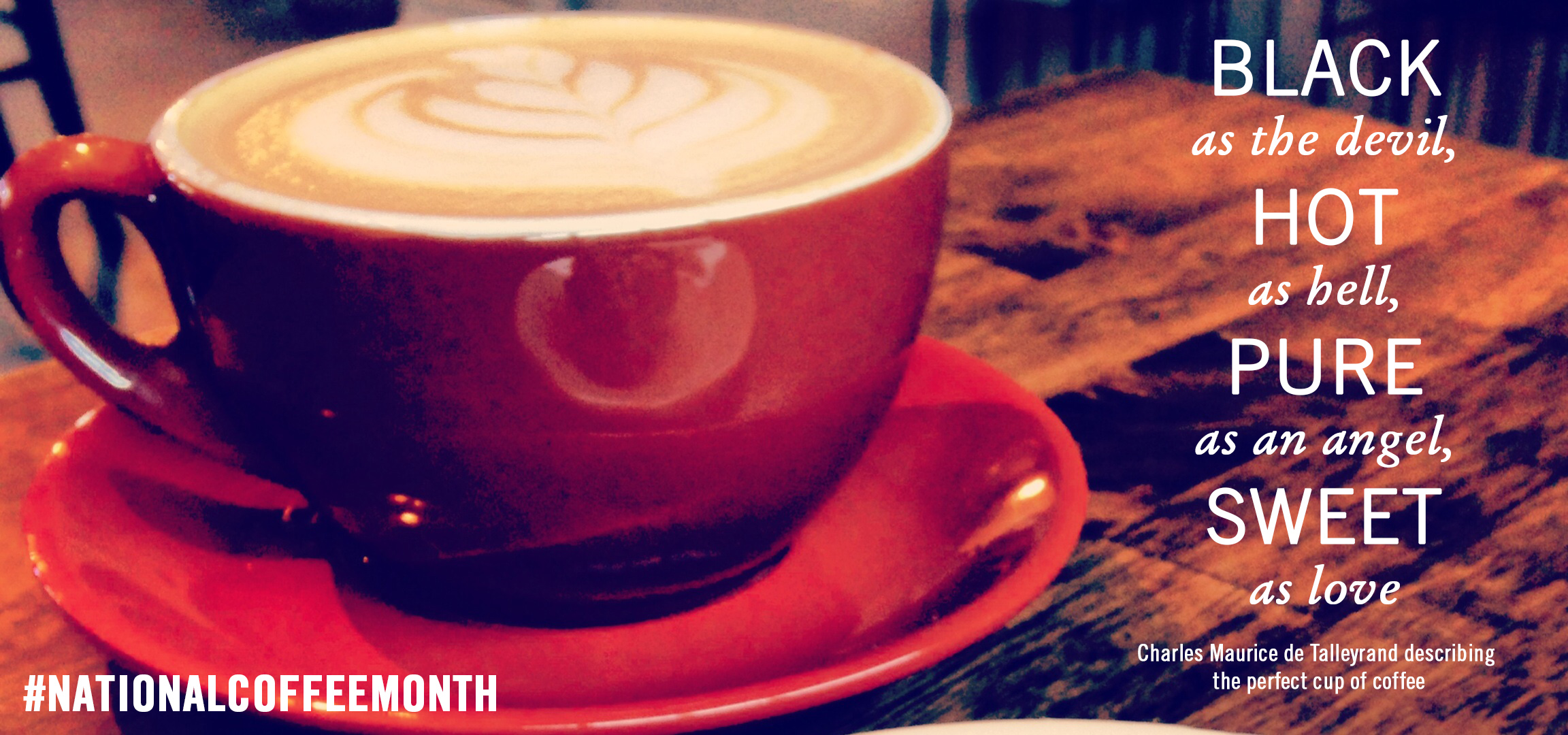
Crema offers both fresh-brewed coffee and pour overs. This isn’t your local chain with every manner of flavors and syrups. What they offer is classic, well-crafted coffee and coffee drinks brewed from beans responsibly sourced and roasted in house. If you enjoy a little adventure, step outside the box and order one of their seasonal drinks. My current favorite is the Kaffe Yen (espresso and steamed milk with cardamom, almond extract and Demerara).

The Kaffe Yen

The Kaffe Yen

They also have amazing pastries made by Dozen Bakery, quiches, and granola (order it with yogurt and bananas). The baristas are friendly, though typically very busy weighing grounds and timing shots with the precision of an aerospace engineer. In addition to serving a great cup of java, Crema believes in educating their customers. Seriously, take one (or all) of their coffee classes and thank me later.

The crowd at the converted cinderblock garage is a good mix of hipsters, business professionals, church planters, and tourists. As a man whose coolest years are in the rear view mirror, I don’t feel out of place as I do in some other local spots.

If you’re close to downtown, be sure to stop by Crema; and if Raleigh is behind the bar, ask him about my latte art prowess.


Keith Pipes is a worship leader and avid coffee drinker. 


Country Living Fair – Part 1

I’m a huge fan of the magazine Country Living. For several years now, I’ve seen their ads for the Country Living Fair that takes place every fall in Ohio and promised myself that one day I would go. Several months ago they announced in the pages of the magazine they were expanding the fair to a second location. It was a dream come true—they were coming to Atlanta! I marked the date on my calendar and have been looking forward to it for months.

The fair was this past weekend and it did not disappoint. There were crafts, antiques, jewelry, clothing, retro collectibles, old stuff and new stuff and new items made from or inspired by vintage items. I had so much fun walking around looking, touching, and smelling. It was almost sensory overload.

Kudos to Country Living for such a well-planned and thoughtful experience. They had cooking, decorating and crafting demonstrations going on all weekend. One of my favorite tents was the live appraisals (think Antiques Roadshow). It was fascinating to listen to strangers tell stories about heirlooms passed down through generations, some with notes of cherished memories and others more burdened by grandma’s junk. The experts (I wish I could remember their names) were gentle but firm with their answers to “what’s it worth?” It seems grandma’s china isn’t worth much these day, except for maybe sentimental value. Their advice? Don’t keep it under lock and key never to be touched. Get it out and use it, enjoy it.

Their other bit of advice? If you’ve been passing some family heirloom down through the family that no one wants and has no value, stop the cycle. If you don’t want it, chances are your kids and their kids won’t either. Worried you’ll hurt grandma’s feelings? Don’t be. She’s dead! You could feel the collective sigh of relief under the appraisal tent.

I could have sat and listened all day, but there was too much waiting for me under the canopy of trees at Stone Mountain.

Strangers in paradise

I’m still basking in the after-glow of the 127 yard sale. This big ol’ party was a gathering spot for strangers who share a love for antiques, junk and great deals. Isn’t it funny how a yard sale can turn strangers into a ragtag community? The camaraderie was contagious. Complete strangers shared memories over retro memorabilia, showed each other their purchases and gave recommendations on where to find a really good deal.

It was a couple of anonymous gents who helped push my car up a muddy incline. Of course, they may have had ulterior motives since they pulled into my parking spot as soon as I vacated it. But I’d like to think they’d have been just as helpful if they hadn’t need a place to park their truck.

At lunch, a crowded lunch spot—The Pig-n-Catch—necessitated sitting family style with other yard sale travelers. We sat with a couple from Wisconsin. What fun we had sharing our treasured finds over a shared plate of fried pickles. It was my idea for Mr. Wisconsin to order the pickles. He’d never heard of such a thing, if you can believe that. “Oh, you have to try the fried pickles,” I prodded. “You know, we fry everything down here.” He was hooked at the first bite.

Our lunch would have been humdrum if we hadn’t met our new friends. It’s amazing what you can learn about people over a plate of barbecue. Loving grandparents – he’s a novice guitar player and soon to be banjo picker; she a doll collector. We ran into them later on down the road and greeted one another like we’d known each other for years.

Obviously, we humans were not created for isolation, but instead for community. And it doesn’t take much to bring people together. Just a simple yard sale. I wonder if we’ll run into Mr. and Mrs. Wisconsin next year?

JOURNEY TO IRAQ: Christ’s story still told in ancient land

Four weeks ago, I boarded a plane for a once-in-a-lifetime journey to the land of desert sheikhs, Aladdin’s lamp and Ali Baba. A land where the desert sands hold the history of its ancient peoples. A land so ancient it is considered the cradle ofIMG2009428754HI civilization. The birthplace of Abraham. The land where Nebuchadnezzar held Israel captive. I was headed to Iraq. My mission: to embed with Southern Baptist chaplains serving in the U.S. military.
On the way to Baghdad, my co-worker and videographer, Tim Kwiat, and I overnighted at a military Life Support Area (LSA) in an undisclosed location in the Middle East. This was my first trip to the Middle East, and I marveled at the barren land surrounding the military base. Beyond the metal fence and concertina wire lay the desert — stretches of sand for miles, with dust clouds whirling over it.

Looking out over the landscape, I imagined Bedouin tribes traveling by caravan on their desert ships. While the sand and dust soon became a nuisance, I tried to remind myself that the dust I was shaking off my pants was possibly the same sand tread upon by Abraham, Ezra or Daniel.

The LSA consists of scores of brown tents housing the 3,000 to 5,000 military personnel and contractors who pass through on their way in and out of the Middle East Theater. Fortunately for us, we spent only one night there; others are not so lucky. I met soldiers and civilians who’d been there for days with no hope yet of a flight out of this dreary tent city.

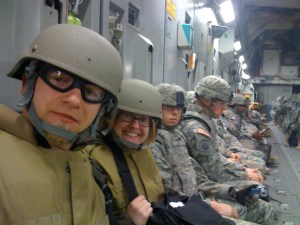
From the LSA we traveled to Baghdad International Airport (BIAP) by way of a C-130 full of soldiers. We arrived before dawn and were met by an officer barking orders at us to get in formation.

“Formation? What kind of formation?” I thought to myself as I struggled to sweep the cobwebs of sleep deprivation from my head. The soldiers formed a series of straight lines. I jumped into one of the lines, thankful that the years of marching band had paid off. We received instructions on how to claim our bags and where to find chow.

After retrieving our bags, we set out to find a ride into the International Zone (IZ). The quickest way to get there is by helicopter, but a dust storm had swept in from the west and all flights had been cancelled. Our only option was to take the midnight Rhino run. It seems the military prefers to move people under the cloak of darkness.

If you don’t have a helicopter at your disposal in Baghdad, there’s only one safe option and that’s to travel in one of the heavily armored Rhino Runner buses. It looks like a boxy RV, but the Rhino Runner is the toughest bus on the planet.

A Mine Resistant Ambush Protected (MRAP) vehicle led our Rhino convoy. It makes a Humvee look like a Mini Cooper. We traveled the famous “Route Irish,” the name for the 7.5-mile road between the secure International Zone in Baghdad and Baghdad International Airport. This stretch of highway was once one of the most dangerous roads in Iraq. I’d read about the white-knuckled rides and the looming dangers of suicide bombers, ambushes and booby-trapped litter. Today, the road is probably one of the safest in Iraq, with U.S. and Iraqi military checkpoints along the way. But the U.S. military still takes precautions when transporting people on it.

The security personnel gave us instructions about what to do in case we were ambushed or hit an IED (improvised explosive device) and where to find the medic kits. Hearing the warnings, I was thankful for the helmet and Kevlar vest I had lugged all the way from Atlanta. And even more thankful to be traveling with highly trained soldiers.

Within 30 minutes we were safely inside the International Zone. A kind soldier from the coalition press office picked us up and took us to what would be our home for the next few days.

AROUND THE INTERNATIONAL ZONE

Once in Baghdad, we spent two days exploring the city within the boundaries of the IZ — now controlled by the Iraqi government. The International Zone (formerly known as the Green Zone) is a heavily guarded diplomatic/government area in central Baghdad. The IZ includes the main palaces of former President Saddam Hussein as well as the new U.S. embassy, the Monument to the Unknown Soldier, the former Ba’ath party headquarters, the Al-Rasheed Hotel, the Convention Center and a large park including Hussein’s famed parade grounds.

Iraq has a terrain of palm trees, incidental water and endless desert. But the citadel on the Tigris River is certainly an oasis of sorts with its tree-lined streets and private gardens. Mosques and tall, skinny minarets dot the landscape of the city. Five times a day, residents are called to prayer by wailing music over a loudspeaker.

The IZ is protected by armed checkpoints, coils of razor wire, chain-link fences and “T-Walls” (reinforced and blast-proof concrete slabs). Escorted by a couple of good-natured soldiers, we visited some of the pertinent “tourist” spots. When we stopped for photos, we often were met by smiling Iraqi soldiers who were all too willing to have their pictures taken.

The Iraqis are a lovely people with manners both primitive and polished, their language flowery and circuitous. Their actions are guided by traditions of conduct and morality that go back to the beginnings of civilization. With the birth of a new democracy, they have hope for a new life, a new beginning. But don’t expect them to throw off the old traditions and cloak themselves in Western ideals and culture. The Iraqi people have begun an intricate dance that ultimately will lead them to find their own balance between ancient traditions and the modern world.

Our arrival was preceded by the January provincial elections — the equivalent of U.S. state legislature elections. I read in the military paper Stars and Stripes that a total of 14,431 candidates, including 3,912 women, competed for 440 provincial council seats in 14 of Iraq’s 18 provinces. The elections took place without major incident, a cause for celebration for the fledgling democracy.

The hovering storm of violence that plagued the country for so many years seems to have dissipated in Baghdad and most of Iraq, and Iraqis have started the reconstruction process. They are now about the business of building a new government, seeking national reconciliation between Sunnis, Shiites, Kurds and Christians and rebuilding their lives. There still are roadside IEDs and car bombs, but for the most part security issues in Baghdad and other parts of Iraq have improved. U.S. forces are downsizing and turning many bases over to the Iraqis. Under the new security agreement, Iraqis now take a leading role in all operations.

“We’re trying to gain their understanding, get them believing in us,” one U.S. soldier said. “That we’re not here as the bad guys, but we are here to try to help them.”

Working with the Iraqi army and police has sometimes proved frustrating for U.S. soldiers. But I heard several soldiers say they’ve seen improvements within recent months. Many are excited to be witnesses to the birth of a new democracy. Added to that excitement is the uncertainty of the future here as troops begin to leave Iraq to fight the war on another front.

GOD AT WORK IN IRAQ

It was explained to me that Iraq is a country that respects the freedom of worship but not the freedom of religion. In other words, Christians who are non-Muslims are allowed to worship God and meet together. Muslims, however, are prohibited from converting to Christianity.

God has placed Christians and specifically Southern Baptists in some key roles within the military in Iraq. While proselytizing Muslims is strictly prohibited, Christians in the military are demonstrating the love of God in their actions. The fruit of the Spirit that exudes from our chaplains and Christian troops is not lost on the Iraqis.

Only God knows the future of Iraq and its people. His ways are not our ways and His plans rarely fit into a nice, neat little package that we can comprehend. But God has a plan for the people of Iraq, of that I’m sure.

I heard again and again that history is being made in Iraq. “His story” began in what is now modern-day Iraq and continues there to this day.

This article first appeared at Baptist Press

Desert Journal Day 3

This morning I headed to the DFAC for an early breakfast. I found an empty seat and was later joined by SGT Smith and SGT Geeley – two nice young soldiers. They were just back from RR in the states and headed back to Afghanistan.

Everyone here is either coming from or going to a Forward Operating Base in the Middle East. Someone said the airbase is like a giant Greyhound bus station but with airplanes instead of buses. Some 3,000 to 6,000 troops come through the base every day. Some are in and out in 24 hours, others spend multiple days waiting on a flight to their destination. It’s a massive operation. And the wait is no fun, according to Smith and Geeley. We chatted over our eggs and coffee. They did their best to prepare me for the weeks ahead.

We have to wait until 1900 to get our passports back and then we can see about getting a flight to Baghdad. I spent the day walking around the base. Everything is brown. So much brown. The base blends right in with the desert landscape. I guess that’s the point.

There’s not much to do except walk past rows of tan tents, or maybe catch a movie at the MWR (I still don’t know what that means). I did a lot of walking. Any direction you looked was all flat desert. I’m sure it’s scorching hot in the summer, but this time of year it feels amazing. There’s always a breeze, and it doesn’t get above the mid-70s.

While we waited, I spent some time with Air Force Chaplain (CPT) Dallas Little who ministers to the thousands of individuals who walk past his office. He always has a pot of hot coffee and an inviting, safe place to hang out.

Little’s focus is to provide a ministry of hospitality. “We provide a safe, comfortable place for travelers as they wait for transport,” says Little. The chaplain’s office is no more than a couple of cubicles, but they managed to create an inviting atmosphere. Visitors to this small oasis are greeted with hot coffee and, if they’re lucky, Krispy Kreme donuts. “We probably go through 25-30 pots of coffee a day.”

Little sees a lot of soldiers on their way back from R and R. For some the trip home brings more trouble than rest. “They’ve been in combat, then they go home and manifest signs of post-traumatic stress,” Little says. “This often leads to trouble with the spouse. By the time they get back here, some wish they’d never gone home.”

Little sees a lot of soldiers and marines who suffer from combat stress and PTSD. His job is to provide a listening ear. “It’s my privilege and my burden to keep anything they say to myself,” says Little. “People come to us, because they know it’s safe to come to us.”

Last year (2018), an estimated 20.2 suicides occurred per 100,000 soldiers, the highest since the Army began tracking the figure in 1980. The figure is just slightly higher than the national suicide rate. 2008 marked the fourth consecutive year suicides have increase, according to the Army’s 2008 Suicide Data report released in January.

“Last year the military had more deaths due to suicide than combat,” says Little. “These guys are eye-to-eye with death. We try to help them deal with what they’ve seen and experienced.”

It’s an intense ministry, but Little is grateful to God for the opportunity to serve others.

Desert Journal: Day 2

Arrived in Kuwait City. I’m not quite fresh or rested after the 13-hour flight. Sleep came in nods and winks. But at least I’m here. A Starbucks and Burger King in the airport lobby were a welcome sight. I’m amazed at how you can walk into a Starbucks anywhere in the world and they all have that same warm cozy feel.

We stepped out of the airport into the cool night air thick with dust. We were just in time to hear the sound of a muezzin from a nearby mosque calling for evening prayers. Our military escorts guided us quickly to their car. They seem anxious about getting us back to the airbase where we will eventually hop a military flight into Baghdad.

We headed north, I think. The lights of the city faded behind us as we drove into the dark.

At the base we handed over our passports and a copy of our orders – yes, real military orders. We were assigned a bunk and mercifully sent off to bed. I couldn’t tell much about the base in the dark. But I did manage to find the ladies’ latrine and shower trailer. Huzzah!