Four weeks ago, I boarded a plane for a once-in-a-lifetime journey to the land of desert sheikhs, Aladdin’s lamp and Ali Baba. A land where the desert sands hold the history of its ancient peoples. A land so ancient it is considered the cradle of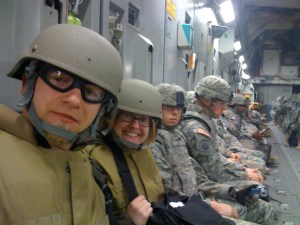 civilization. The birthplace of Abraham. The land where Nebuchadnezzar held Israel captive. I was headed to Iraq. My mission: to embed with Southern Baptist chaplains serving in the U.S. military.
On the way to Baghdad, my co-worker and videographer, Tim Kwiat, and I overnighted at a military Life Support Area (LSA) in an undisclosed location in the Middle East. This was my first trip to the Middle East, and I marveled at the barren land surrounding the military base. Beyond the metal fence and concertina wire lay the desert — stretches of sand for miles, with dust clouds whirling over it.
Looking out over the landscape, I imagined Bedouin tribes traveling by caravan on their desert ships. While the sand and dust soon became a nuisance, I tried to remind myself that the dust I was shaking off my pants was possibly the same sand tread upon by Abraham, Ezra or Daniel.
The LSA consists of scores of brown tents housing the 3,000 to 5,000 military personnel and contractors who pass through on their way in and out of the Middle East Theater. Fortunately for us, we spent only one night there; others are not so lucky. I met soldiers and civilians who’d been there for days with no hope yet of a flight out of this dreary tent city.
From the LSA we traveled to Baghdad International Airport (BIAP) by way of a C-130 full of soldiers. We arrived before dawn and were met by an officer barking orders at us to get in formation.
“Formation? What kind of formation?” I thought to myself as I struggled to sweep the cobwebs of sleep deprivation from my head. The soldiers formed a series of straight lines. I jumped into one of the lines, thankful that the years of marching band had paid off. We received instructions on how to claim our bags and where to find chow.
After retrieving our bags, we set out to find a ride into the International Zone (IZ). The quickest way to get there is by helicopter, but a dust storm had swept in from the west and all flights had been cancelled. Our only option was to take the midnight Rhino run. It seems the military prefers to move people under the cloak of darkness.
If you don’t have a helicopter at your disposal in Baghdad, there’s only one safe option and that’s to travel in one of the heavily armored Rhino Runner buses. It looks like a boxy RV, but the Rhino Runner is the toughest bus on the planet.
A Mine Resistant Ambush Protected (MRAP) vehicle led our Rhino convoy. It makes a Humvee look like a Mini Cooper. We traveled the famous “Route Irish,” the name for the 7.5-mile road between the secure International Zone in Baghdad and Baghdad International Airport. This stretch of highway was once one of the most dangerous roads in Iraq. I’d read about the white-knuckled rides and the looming dangers of suicide bombers, ambushes and booby-trapped litter. Today, the road is probably one of the safest in Iraq, with U.S. and Iraqi military checkpoints along the way. But the U.S. military still takes precautions when transporting people on it.
The security personnel gave us instructions about what to do in case we were ambushed or hit an IED (improvised explosive device) and where to find the medic kits. Hearing the warnings, I was thankful for the helmet and Kevlar vest I had lugged all the way from Atlanta. And even more thankful to be traveling with highly trained soldiers.
Within 30 minutes we were safely inside the International Zone. A kind soldier from the coalition press office picked us up and took us to what would be our home for the next few days.
AROUND THE INTERNATIONAL ZONE
Once in Baghdad, we spent two days exploring the city within the boundaries of the IZ — now controlled by the Iraqi government. The International Zone (formerly known as the Green Zone) is a heavily guarded diplomatic/government area in central Baghdad. The IZ includes the main palaces of former President Saddam Hussein as well as the new U.S. embassy, the Monument to the Unknown Soldier, the former Ba’ath party headquarters, the Al-Rasheed Hotel, the Convention Center and a large park including Hussein’s famed parade grounds.
Iraq has a terrain of palm trees, incidental water and endless desert. But the citadel on the Tigris River is certainly an oasis of sorts with its tree-lined streets and private gardens. Mosques and tall, skinny minarets dot the landscape of the city. Five times a day, residents are called to prayer by wailing music over a loudspeaker.
The IZ is protected by armed checkpoints, coils of razor wire, chain-link fences and “T-Walls” (reinforced and blast-proof concrete slabs). Escorted by a couple of good-natured soldiers, we visited some of the pertinent “tourist” spots. When we stopped for photos, we often were met by smiling Iraqi soldiers who were all too willing to have their pictures taken.
The Iraqis are a lovely people with manners both primitive and polished, their language flowery and circuitous. Their actions are guided by traditions of conduct and morality that go back to the beginnings of civilization. With the birth of a new democracy, they have hope for a new life, a new beginning. But don’t expect them to throw off the old traditions and cloak themselves in Western ideals and culture. The Iraqi people have begun an intricate dance that ultimately will lead them to find their own balance between ancient traditions and the modern world.
Our arrival was preceded by the January provincial elections — the equivalent of U.S. state legislature elections. I read in the military paper Stars and Stripes that a total of 14,431 candidates, including 3,912 women, competed for 440 provincial council seats in 14 of Iraq’s 18 provinces. The elections took place without major incident, a cause for celebration for the fledgling democracy.
The hovering storm of violence that plagued the country for so many years seems to have dissipated in Baghdad and most of Iraq, and Iraqis have started the reconstruction process. They are now about the business of building a new government, seeking national reconciliation between Sunnis, Shiites, Kurds and Christians and rebuilding their lives. There still are roadside IEDs and car bombs, but for the most part security issues in Baghdad and other parts of Iraq have improved. U.S. forces are downsizing and turning many bases over to the Iraqis. Under the new security agreement, Iraqis now take a leading role in all operations.
“We’re trying to gain their understanding, get them believing in us,” one U.S. soldier said. “That we’re not here as the bad guys, but we are here to try to help them.”
Working with the Iraqi army and police has sometimes proved frustrating for U.S. soldiers. But I heard several soldiers say they’ve seen improvements within recent months. Many are excited to be witnesses to the birth of a new democracy. Added to that excitement is the uncertainty of the future here as troops begin to leave Iraq to fight the war on another front.
GOD AT WORK IN IRAQ
It was explained to me that Iraq is a country that respects the freedom of worship but not the freedom of religion. In other words, Christians who are non-Muslims are allowed to worship God and meet together. Muslims, however, are prohibited from converting to Christianity.
God has placed Christians and specifically Southern Baptists in some key roles within the military in Iraq. While proselytizing Muslims is strictly prohibited, Christians in the military are demonstrating the love of God in their actions. The fruit of the Spirit that exudes from our chaplains and Christian troops is not lost on the Iraqis.
Only God knows the future of Iraq and its people. His ways are not our ways and His plans rarely fit into a nice, neat little package that we can comprehend. But God has a plan for the people of Iraq, of that I’m sure.
I heard again and again that history is being made in Iraq. “His story” began in what is now modern-day Iraq and continues there to this day.
This article first appeared at Baptist Press.
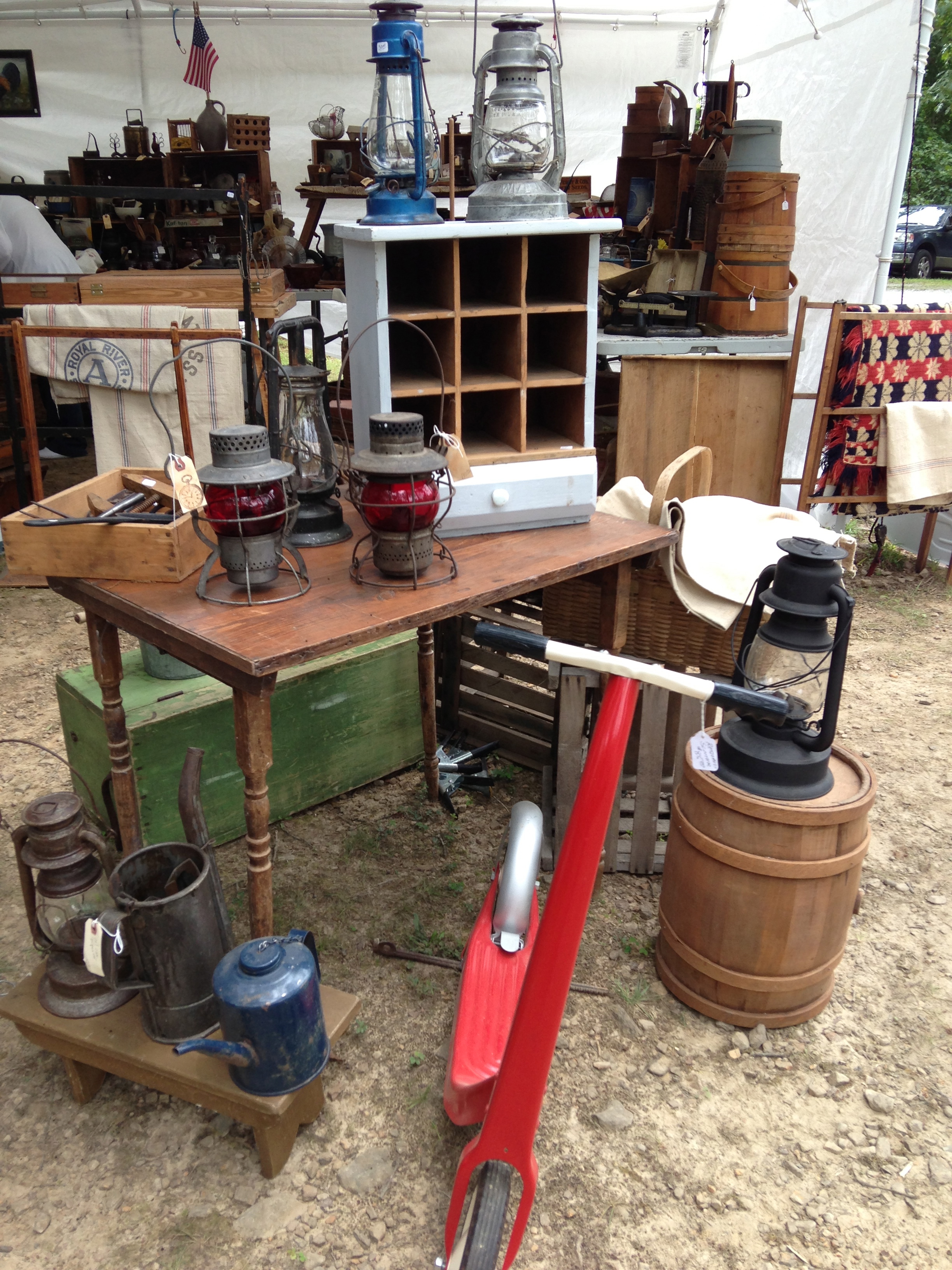 I first heard the word junking (pronounced junkin’) from my grandmother Spurlin. She used it interchangeably with antiquing. Both terms meant rummaging through someone else’s stuff looking for that perfect, priceless treasure.
 Carol Pipes